A halal salad is one built from permitted ingredients and kept clear of cross contact with anything haram during prep, storage, or serving, as the FAO's halal guidelines lay out. At home, that means making your own dressing and checking any meat is zabiha. Eating out, it means asking the kitchen directly whether they can prepare your order halal upon request and keep it separate from everything else. The recipes and scripts below cover both.
TL;DR:
- Salads are only halal if prepared with uncontaminated equipment, proper handling, and verified permitted ingredients, especially concerning dressings and processed toppings.
- Store-bought dressings often contain alcohol, animal rennet, or stabilizers that are not halal, making homemade vinaigrettes or yogurt-based dressings the safest choice.
- Checking labels for ingredients like rennet, gelatin, fish sauce, or alcohol extracts is essential when selecting cheeses, bread, or toppings to ensure they are halal.
- Asking restaurants specifically for halal preparation with separate utensils and storage helps avoid cross-contact with non-halal items during eating out.
- Building a halal salad around whole, minimally processed ingredients like fresh vegetables, herbs, and verified meat ensures higher nutritional quality and compliance.
Table of Contents
- What Are Halal Salads, and Why Ingredients Alone Aren't Enough
- Five Easy Halal-Friendly Salad Recipes You Can Make Tonight
- What Makes a Salad Halal: The Ingredient and Process Checklist
- Dressings, Toppings, and Halal-Safe Swaps
- How to Order a Halal Salad When You're Eating Out
- Nutritional Benefits and Considerations of Halal Salads
- Cultural Significance and Regional Variations of Halal Salads
- Zio Al's Team Perspective: How We Approach Halal-Upon-Request Orders
- Order Halal-Friendly Salads and Catering From Zio Al's
- Sources
- FAQ
What Are Halal Salads, and Why Ingredients Alone Aren't Enough
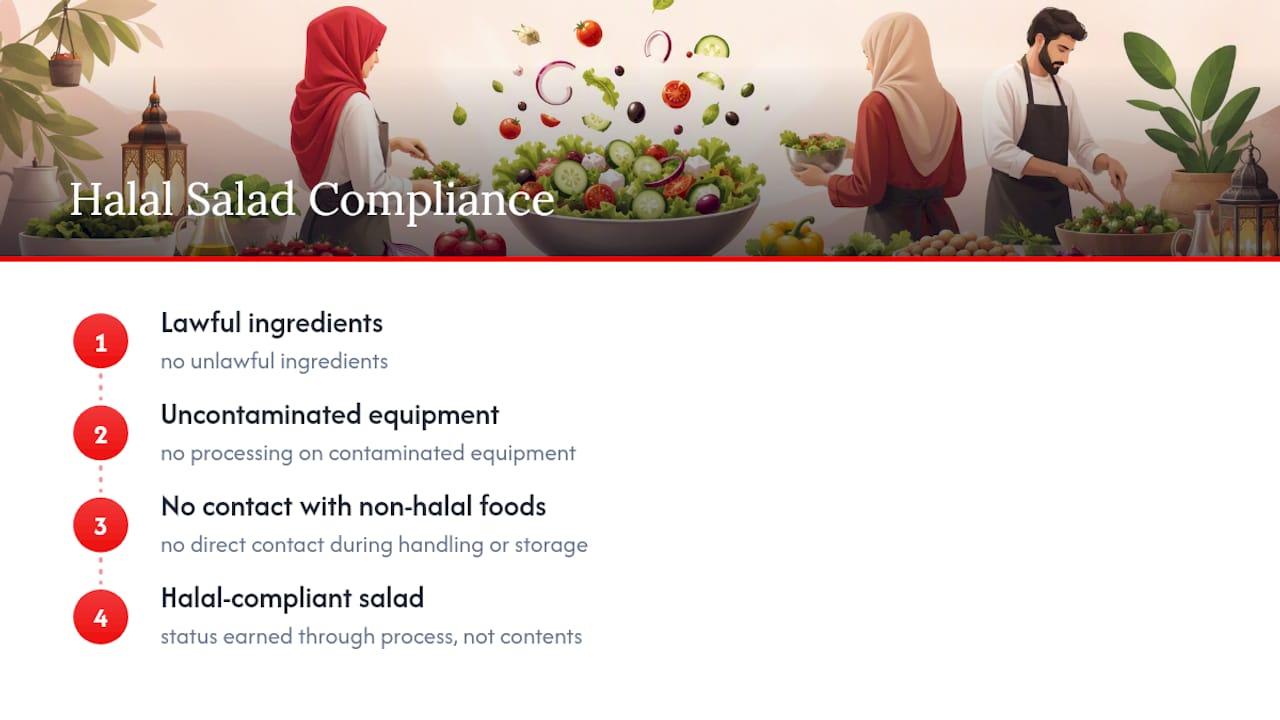
Most people assume a salad is automatically halal because it looks meat-free and healthy. That assumption trips up more home cooks and diners than any other halal question, because the FAO's guidelines treat halal as a status earned through process, not just contents. A vegetable salad tossed on a cutting board that just handled a non-halal item, or dressed with a sauce processed on shared lines, loses its halal status even though every visible ingredient looks fine. The salad itself never contained anything haram, but the equipment did.
This is the standard term worth knowing: halal food compliance rests on three pillars, no unlawful ingredients, no processing on contaminated equipment, and no direct contact with non-halal foods during handling or storage. Salads sit at an odd intersection of these rules because they combine raw produce (usually low risk), proteins (higher risk if meat is involved), and manufactured dressings (the sneakiest risk of all). Knowing which part of your bowl carries the actual risk saves you from over-worrying about lettuce and under-worrying about ranch dressing.
Five Easy Halal-Friendly Salad Recipes You Can Make Tonight
These five options range from fully plant-based to protein-forward, and each one flags exactly where to double-check for halal compliance.
- Halal cart-style chicken salad. Marinate diced chicken (confirmed zabiha, or ask your butcher to verify) in cumin, coriander, garlic, and a splash of lemon juice, then grill or pan-sear until cooked through. Toss over chopped romaine with a yogurt-based white sauce (plain yogurt, mayo, garlic, a pinch of sugar) and a handful of crushed pita chips for crunch. Serve within an hour of cooking for the best texture.
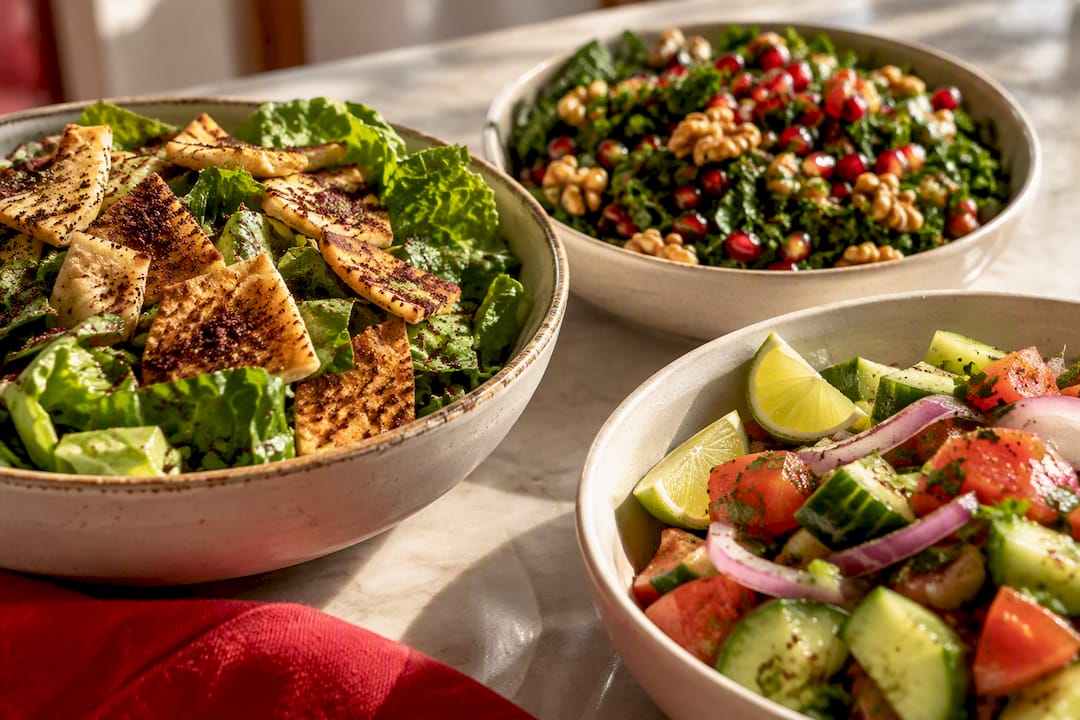
- Simple Middle Eastern salad. Combine diced tomato, cucumber, red onion, and a generous amount of chopped parsley, then dress with lemon juice and olive oil. This one is naturally halal and vegetarian since nothing here needs sourcing scrutiny beyond checking your olive oil hasn't been cut with anything unusual.
- Fattoush-style salad. Build this from romaine, radish, tomato, cucumber, and sumac, topped with crisped pita pieces. The catch is the bread: many store-bought pitas and bagged croutons use L-cysteine, a dough conditioner sometimes derived from animal sources, so check the label or bake your own pita chips from a plain flour, water, and yeast dough.
- Yogurt chicken salad. Shred cooked, verified halal chicken and mix with plain yogurt, celery, and a squeeze of lime for a cool sandwich filling or salad bowl base. If you're adding shredded cheese on top, confirm it lists microbial or vegetable rennet rather than animal rennet, since traditional rennet comes from calf stomach enzymes.
- Chickpea and roasted vegetable salad. Roast chickpeas, bell peppers, and zucchini with olive oil and paprika, then toss with arugula and a light vinaigrette. This is the highest-confidence option on the list. No meat, no dairy, no ambiguous processing aids, just whole ingredients you controlled from start to finish.
For all five, keep a few habits consistent:
- Cook meat to a safe internal temperature and let it rest before slicing into the salad.
- Dress salads just before serving so greens don't wilt and proteins stay food-safe.
- Double-check any bottled sauce or premade topping against the label checklist in the next section.
What Makes a Salad Halal: The Ingredient and Process Checklist
The FAO's framework breaks down into three checks worth memorizing: no haram ingredients, no equipment contaminated by non-halal handling, and no direct contact with non-halal foods anywhere in the chain from prep to storage. Salads fail this test more often through the dressing bottle than through the vegetables.
Hidden non-halal items show up more often in salads than most people expect. Watch for these on ingredient labels or when asking a server:
- Rennet in cheese, often animal-derived unless labeled microbial or vegetarian
- Whey in some processed cheeses and creamy dressings, which can trace back to animal rennet
- Gelatin in certain thickened dressings or aspic-style toppings
- Anchovy or fish sauce hidden in Caesar dressing and some Worcestershire-based vinaigrettes
- Alcohol-based extracts used in flavorings or reduction sauces, which many scholars classify as haram
- L-cysteine in packaged bread, pita, and some croutons
A halal certification body's guidance on ready-to-eat salads makes the point plainly: prepackaged salads are not automatically compliant, because dressings, toppings, and manufacturing aids can quietly introduce something haram even when the produce itself is clean. When you're reading a label or calling a restaurant, ask three questions: What's in the dressing? What's the cheese made with? And has this touched anything non-halal during prep? Those three questions catch the vast majority of hidden problems.
Dressings, Toppings, and Halal-Safe Swaps
Store-bought dressing is the single riskiest item in most halal salads, mostly because ingredient lists bury small amounts of alcohol, animal-derived stabilizers, or unclear "natural flavors." Making your own takes five minutes and removes the guesswork entirely.
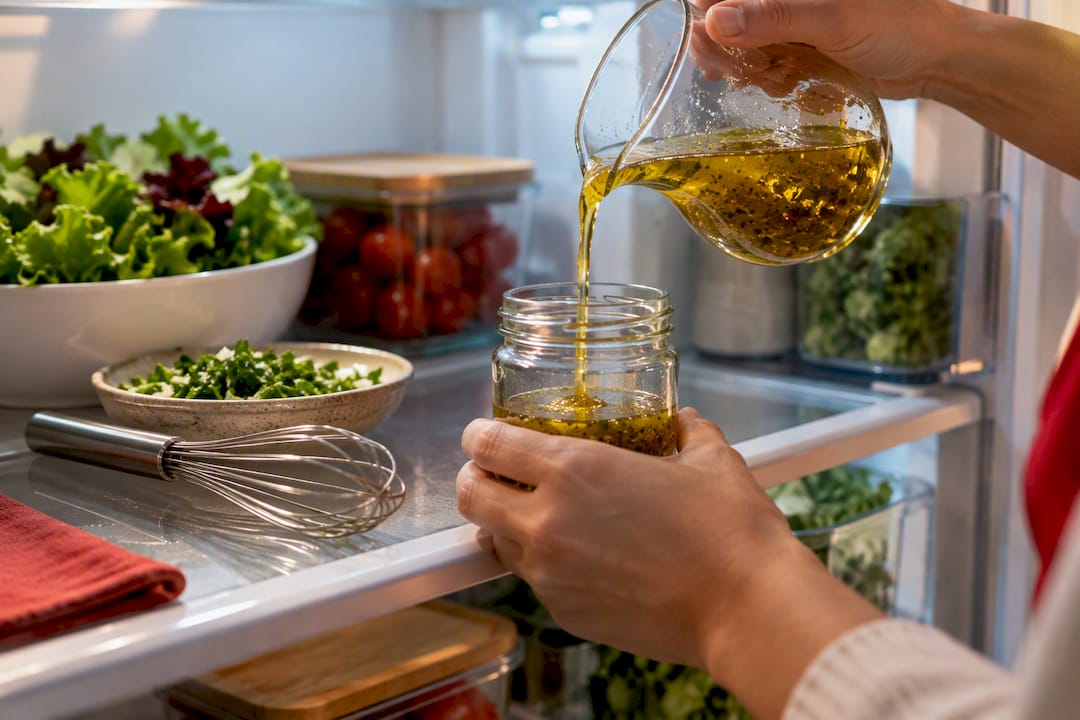
- Basic vinaigrette. Whisk 3 parts olive oil to 1 part lemon juice or red wine vinegar, add a spoon of Dijon mustard, minced garlic, salt, and pepper. Shake or whisk until it emulsifies.
- Tahini-yogurt dressing. Blend tahini, plain yogurt, lemon juice, a splash of water, and minced garlic until smooth. This pairs naturally with fattoush and Middle Eastern-style bowls.
- Creamy yogurt-dill dressing. Mix plain yogurt with chopped fresh dill, lemon zest, a touch of honey, salt, and pepper. Great over grilled chicken salad or as a dip for raw vegetables.
For toppings, cheese needs the closest look. Feta, halloumi, and shredded cheddar sometimes use animal rennet, so look for labels reading "microbial rennet" or "vegetable rennet" instead. Skip premade bacon bits entirely (most are pork-based) and swap in toasted nuts, seeds, or crisped beef bacon crumbles if you want that same smoky crunch. Croutons deserve the same label check as pita bread, since some use the same L-cysteine dough conditioners.
Pro Tip: Keep a small jar of your go-to vinaigrette in the fridge at all times. Homemade dressing lasts about a week, and having it ready removes the temptation to grab a questionable bottled option when you're in a hurry.
How to Order a Halal Salad When You're Eating Out
Vague questions get vague answers. Instead of asking "Is this halal?", which invites a shrug, ask something the kitchen can actually act on: "Can you prepare this halal upon request, using separate utensils and a fresh container?" That phrasing forces a concrete yes or no.
A few more scripts worth having ready:
- "Do you have zabiha meat available, or is this a vegetarian option that's naturally halal?"
- "Can the dressing come on the side so I can check the ingredients myself?"
- "Will this be prepared with separate utensils and stored apart from non-halal items?"
Watch how staff respond. A restaurant that understands halal upon request will mention dedicated utensils, labeled tickets, or separate prep stations without hesitation. A vague "yeah, it's basically halal" is a signal to ask more questions or choose a different item. For delivery orders, request dressing sealed separately, ask for freshly cut produce rather than pre-mixed bagged salad, and note any halal request clearly in the delivery instructions so it reaches the kitchen, not just the driver.
Nutritional Benefits and Considerations of Halal Salads
Halal salads built around whole ingredients tend to be naturally nutrient-dense, since the safest, most verifiable options (chickpeas, roasted vegetables, fresh herbs, olive oil) also happen to be the ones nutritionists recommend most often. A chickpea and roasted vegetable salad delivers plant protein, fiber, and healthy fats without a single ingredient that needs a phone call to verify.
The tradeoff shows up when you lean on convenience. Bottled dressings that are easiest to grab often carry the most sodium, added sugar, and questionable stabilizers, which is exactly why making your own vinaigrette or yogurt-based dressing serves two goals at once: cleaner sourcing and better nutrition. Yogurt-based dressings, in particular, add protein and probiotics that a bottled ranch or Caesar simply doesn't offer.
If you're building a halal chicken salad, portion control matters more than the halal check itself. Grilled, verified halal chicken is lean and high in protein, but creamy dressings can quietly double the calorie count of an otherwise healthy bowl. Balancing a rich dressing like the tahini-yogurt blend with a lighter vinaigrette on alternating days keeps the meal satisfying without tipping it into heavy territory.
Cultural Significance and Regional Variations of Halal Salads
Halal salads look different depending on where you are, which makes sense given how many cuisines fall under halal dietary practice worldwide. The Levantine fattoush, with its toasted or fried pita and sumac tang, reflects a Middle Eastern tradition of using stale bread rather than wasting it. Turkish-inspired salads often lean on parsley, pomegranate molasses, and walnuts, while South Asian households frequently build a kachumber, a simple onion, tomato, and cucumber mix dressed with lime and chaat masala, as a cooling side to spicier mains.
In the United States, halal cart-style salads grew out of New York City's street food scene, where halal meat carts serving chicken and rice over lettuce with white sauce became a lunch staple for a broad, diverse customer base. That dish traveled far beyond its original neighborhoods and now shows up on menus across the country in some form.
What ties these variations together isn't a single recipe. It's the shared framework of permitted ingredients and clean handling that lets a dish rooted in one culture translate naturally into another. A halal salad in Dallas can borrow from Lebanese, Pakistani, or Turkish traditions and still meet the same underlying standard, because the rules are about process and sourcing, not a fixed list of approved dishes.
Zio Al's Team Perspective: How We Approach Halal-Upon-Request Orders
Our menu is pork-free by default, using beef pepperoni, turkey ham, and beef bacon. Zabiha halal is prepared upon request, not as a certified standard, and we're open until 3 AM, 365 days a year, with dough made fresh daily. For a halal-upon-request order, that typically means fresh gloves, a labeled ticket, and dressing prepared separately from the rest of the line, the same operational logic covered above.
— Zio Al's Team
Order Halal-Friendly Salads and Catering From Zio Al's
You don't have to choose between a home-cooked halal salad and a takeout gamble. Zio Al's Pizza & Pasta runs a pork-free menu using beef pepperoni, turkey ham, and beef bacon, and we prepare zabiha halal upon request rather than as a blanket certification, so you know exactly what you're asking for and why. We're open until 3 AM, 365 days a year, holidays included, which matters when your halal-friendly craving hits well past dinner hours.
Order direct at Zioals or through the Zio Al's app and take 15% off your first app order, no third-party delivery markup involved. Planning something bigger, an office lunch or a family event? Check out our catering packages for group-sized halal-friendly options. If you're near one of our Dallas-Fort Worth or Katy locations, browse the Cedar Springs or Plano pages for pickup and dine-in details. Place your order tonight and see what fresh dough, done your way, actually tastes like.
Sources
- General Guidelines for Use of the Term 'Halal' (FAO)
- Salad, Halal choice for clean eating (LPPOM/HALAL MUI)
FAQ
Is Chick-fil-A Halal for Muslims?
Chick-fil-A is not certified halal, and its chicken is not prepared using dhabihah slaughter methods, so it does not meet halal standards for most Muslims. Some independent halal-certified fried chicken chains exist, but always verify certification directly with the location rather than assuming.
What Are Typical Halal Dishes?
Typical halal dishes span nearly every cuisine, since halal is a standard of ingredients and process rather than a specific recipe list, including grilled meats, rice dishes, stews, and fresh salads made with permitted ingredients. Middle Eastern fattoush, South Asian kachumber, and halal cart chicken over rice are common examples.
How Do You Make a Halal Salad?
Start with whole, unprocessed ingredients like fresh vegetables, herbs, and verified zabiha meat if you're adding protein, then make your own dressing instead of relying on bottled options. Checking labels for rennet, gelatin, and alcohol-based extracts, as outlined by halal food guidance, covers most of the risk.
Which Salad Dressing Is Halal?
A dressing is halal when every ingredient is permitted and it hasn't been processed on equipment shared with non-halal foods, which is easiest to guarantee by making it yourself. Simple vinaigrettes, tahini-yogurt blends, and plain yogurt-based dressings are reliable homemade options that avoid the alcohol extracts and animal-derived stabilizers sometimes found in bottled versions.
Does Zio Al's Pizza & Pasta Offer Halal Options?
Zio Al's Pizza & Pasta runs a pork-free menu and prepares zabiha halal upon request, though the restaurant is not halal certified. Ask your local Zio Al's directly when ordering to confirm halal-upon-request preparation for your meal.