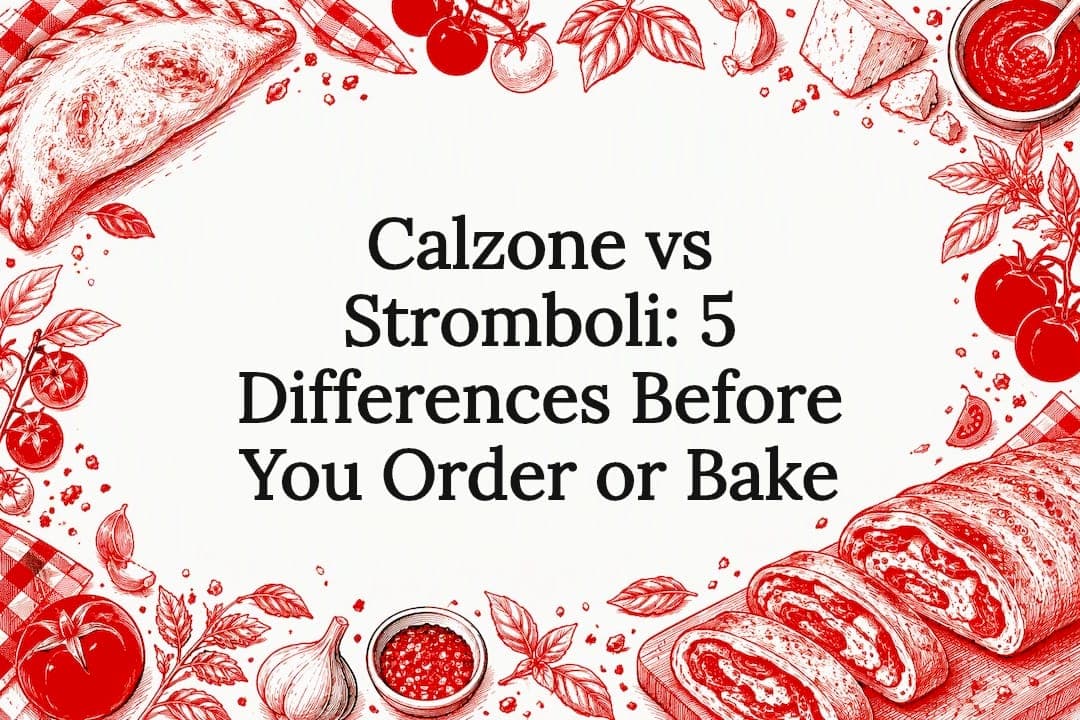
The clearest way to tell them apart comes down to shape and sealing. A calzone is pizza dough folded into a half-moon, usually paired with ricotta and a side of marinara for dipping. A stromboli is rolled into a log, often packed with low-moisture mozzarella, and sometimes has sauce baked right inside.
TL;DR:
- Cook watery vegetables such as peppers, onions, and mushrooms before filling either dish, then pat them dry to reduce soggy crusts.
- Crimp a calzone’s curved edge in small pleats and vent its top; roll stromboli tightly, pinch the seam, and tuck both ends underneath.
- At Zio Al’s, Zabiha halal is prepared upon request; menus also vary in cheese and sauce placement, so confirm those details before ordering.
- Choose a whole calzone for a solo meal, while stromboli suits groups because cooks slice it into portions for sharing.
Table of Contents
- Calzone vs Stromboli: A Side-by-Side Comparison
- Where Calzone and Stromboli Come From
- What Goes Inside: Fillings and Cheese Choices
- Sauce: Inside, on the Side, or Both?
- How to Avoid a Soggy Interior: Cooking and Sealing Tips
- Choosing Between a Calzone and a Stromboli When You Order
- When Each One Shows Up on the Table
- Our Take on Folded vs Rolled Favorites
- Try a Folded or Rolled Favorite Tonight
- FAQ
- Sources
Calzone vs Stromboli: A Side-by-Side Comparison
Once you know what to look for, spotting the difference takes about two seconds. Here's how the two stack up across the details that matter most when you're ordering or cooking.
- Shape and sealing: calzones fold into a half-moon and pinch shut at the curved edge; stromboli rolls into a log and seals along one seam.
- Cheese: calzones typically lean on a ricotta blend for a creamy center, while stromboli favors low-moisture mozzarella to hold its shape.
- Sauce placement: calzones are usually served with marinara on the side for dipping; stromboli can bake sauce inside, though plenty of versions skip it.
- Origin: the calzone traces back to Naples, while stromboli is an Italian-American invention.
- Serving style: calzones are built as a single portable serving; stromboli gets sliced into pieces for sharing.
None of these rules are absolute. Menus vary, and plenty of kitchens put their own spin on both. But these five points cover what you'll find most often, whether you're reading a menu or rolling dough yourself.
Where Calzone and Stromboli Come From
The calzone's name gives away its shape: it loosely translates to "trouser," a nod to the folded pocket it forms around its filling. It started in Naples as a portable way to eat pizza toppings on the move, folded shut so the filling stayed put.
Stromboli came later and an ocean away. It's an Italian-American creation that took shape in the United States, rolled rather than folded, and named after the island and volcano rather than any culinary tradition back in Italy.
- Calzone: Naples, folded street food meant for one person.
- Stromboli: Italian-American, rolled and built to slice for a group.
That split in origin explains a lot about how each dish is still served today: one as a personal pocket, the other as a shareable tray.
What Goes Inside: Fillings and Cheese Choices
Both dishes pull from a similar pantry: cheeses, cured meats, vegetables, and herbs. The difference is in how those ingredients behave once they're sealed inside dough and baked.
- Cheeses: ricotta brings creaminess to a calzone; mozzarella gives stromboli its pizza-like pull.
- Meats: diced or sliced deli-style meats work well in both, since they add flavor without excess liquid.
- Vegetables: peppers, onions, and mushrooms need to be cooked down first or they'll release too much water during baking.
Ricotta works in a calzone because the dough pocket holds moisture in a contained space, and a short bake time keeps it from turning watery. Stromboli's longer, flatter shape gives moisture more room to spread, which is why low-moisture mozzarella is the safer call there. If you're ordering, a calzone with ricotta and spinach or a stromboli with mozzarella and a mix of cured meats both hit the classic notes.
Pro Tip: Pat vegetables dry with a paper towel before adding them to either dish, it cuts down on extra moisture that can make the crust soggy.

Sauce: Inside, on the Side, or Both?
Sauce placement trips people up more than anything else, and the shape of each dish explains why. A calzone's sealed pocket traps steam, so sauce baked inside tends to turn the interior soupy. That's why calzones are almost always served with marinara on the side for dipping instead.
Stromboli's open, rolled structure handles sauce differently. A thin layer baked inside the roll has more surface area to cook off excess liquid, so some recipes include it while others leave it out entirely and serve it alongside instead.
- Calzones: sauce on the side, dipped rather than baked in.
- Stromboli: sauce sometimes baked inside, sometimes served alongside, depending on the recipe.
- Portioning: calzones are sized for one; stromboli is sliced to serve several.
When in doubt, ask. Menus and recipes vary enough that confirming sauce placement before you order saves any surprise.
How to Avoid a Soggy Interior: Cooking and Sealing Tips
Getting either dish right comes down to managing moisture and sealing the dough so nothing leaks out mid-bake. A few practical steps make the difference between a clean slice and a mess on the pan.
- Choose low-moisture mozzarella for stromboli and limit wet fillings like raw tomatoes or watery vegetables.
- Crimp the calzone's curved edge firmly, folding the dough over itself in small pleats so it holds under oven heat.
- Roll stromboli tightly around the filling, then pinch the seam and tuck the ends underneath before baking.
- Vent the calzone with a small knife slit on top so steam can escape instead of building up inside.
- Brush with egg wash or oil before baking for color and a better seal, then bake at a high, steady oven temperature until golden, following the timing in a trusted stromboli recipe.
Pro Tip: If your stromboli seam keeps splitting open, let the rolled dough rest for five minutes before baking, it gives the gluten time to relax and hold the seal.
Choosing Between a Calzone and a Stromboli When You Order
Your pick often comes down to how hungry you are and who you're feeding. A calzone makes sense when you want a single, portable meal with a creamy ricotta center and sauce you control by dipping as you go. A stromboli works better when you're feeding a few people, want pizza-style toppings in every bite, and don't mind sauce baked right in.
- Pick a calzone if you're eating solo and want ricotta with sauce on the side.
- Pick stromboli if you're sharing and want a sliceable, pizza-like filling.
- Ask whether sauce is baked in or served alongside before you order.
- Ask what cheese is used if texture matters to you.
- Mention halal upon request if that's part of your order, since it's prepared on request rather than as a default.
A quick question or two at the counter clears up most of the guesswork before your food even hits the oven.
When Each One Shows Up on the Table
Calzones tend to show up as a quick, solo lunch or dinner, the kind of meal you can eat with one hand while running between errands. Their folded, portable shape made them street food in Naples long before they became a lunch counter staple elsewhere, and that single-serving format still fits best when you're eating on your own schedule.
Stromboli leans toward group settings. Sliced into pieces, it shows up at family dinners, office lunches, and casual parties where people are grabbing a slice rather than a whole portion. The shareable format makes it a natural fit for a spread alongside wings or a pizza with a few different topping combinations.

Neither dish is locked into one occasion. Plenty of people order a calzone for a weekend dinner and stromboli for a weekday lunch. But if you're planning a meal for one, the calzone's built for that. If you're feeding a group and want something easy to portion out, stromboli does the job without much extra effort.
Our Take on Folded vs Rolled Favorites
We get asked about sauce placement and cheese almost every week, which tells us how much these two dishes get mixed up on menus everywhere. Our dough is made fresh in-house daily, and whether a guest wants a classic ricotta-forward pocket or a rolled, shareable favorite, we build it with beef pepperoni, turkey ham, or beef bacon since our whole menu stays pork-free. Zabiha halal is available upon request. Order direct at Zioals and skip the line.
— Zio Al's Team
Try a Folded or Rolled Favorite Tonight
We're open until 3 AM, 365 days a year, which means a late-night craving for something folded or rolled never has to wait until tomorrow. Our dough gets made fresh in-house every day, and our whole menu stays pork-free, with beef pepperoni, turkey ham, and beef bacon standing in for the usual cuts. Zabiha halal is prepared upon request.

Order direct at Zioals or through the Zio Al's app and take 15% off your first app order, no delivery app markup attached. Planning for a group? Check out our catering packages for office lunches and parties across the Dallas-Fort Worth area.
FAQ
Do calzones always have ricotta?
Not always, but ricotta is the most common cheese choice because it holds up well inside a sealed, folded pocket. Some recipes swap in mozzarella or a blend instead, so it varies by kitchen.
Is stromboli just a rolled up pizza?
Stromboli shares pizza-style fillings and dough, but it's rolled into a log and sliced rather than left open-faced. It's an Italian-American creation built specifically for that rolled, shareable format.
What is a calzone with sauce inside called?
There isn't a separate, widely recognized name for that version. Most calzones keep sauce on the side for dipping, since baking it inside the sealed pocket tends to make the interior soggy.
Is calzone dough just pizza dough?
Calzone dough is typically the same base as pizza dough, just folded and sealed rather than left flat. The dough needs to hold its shape around a filling, so some cooks use a slightly firmer version.
Sources
- Calzone | Britannica
- What Is the Difference Between a Calzone and a Stromboli? | Bon Appétit
- How to make stromboli | Serious Eats